When Fences Lie: Protecting Your Land Investment from Hidden Boundary Disputes
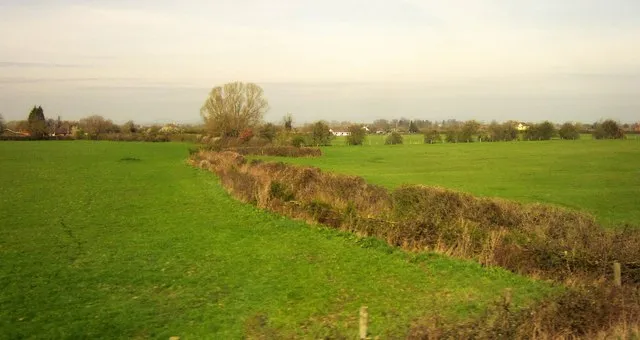
Photo: Derek Harper , CC BY-SA 2.0, via Wikimedia Commons
There is a common assumption among first-time land buyers that what they see is what they get. A fence line runs along the back of a parcel, a neighbor's barn sits a comfortable distance away, and the county tax records seem straightforward enough. Yet experienced land investors know that visible markers are among the least reliable indicators of where legal ownership actually ends. Boundary disputes, encroachments, and adverse possession claims represent a class of title risk that can quietly undermine an investment long before the ink dries on a deed.
Understanding these risks—and knowing precisely where to look for them—is not optional due diligence. It is foundational to any sound land acquisition strategy.
What Is Encroachment, and Why Does It Matter?
Encroachment occurs when a structure, improvement, or use belonging to one party physically crosses onto land owned by another. This can take many forms: a neighbor's driveway that drifts over a survey line by six feet, a storage shed constructed on what the owner believed was their own property, a drainage ditch redirected across a boundary, or agricultural fencing installed decades ago along an approximated rather than surveyed line.
In isolation, these intrusions may appear minor. In practice, they can complicate title transfers, reduce the usable footprint of a parcel, trigger costly litigation, and—under certain legal conditions—result in an outright loss of land.
That last possibility is where adverse possession enters the picture.
Adverse Possession: The Legal Doctrine That Can Quietly Claim Your Acreage
Adverse possession is a doctrine rooted in common law that allows an individual to claim legal ownership of land they have openly and continuously occupied—even without the original owner's permission—over a statutory period. The specific requirements vary by state, but most jurisdictions require that the occupation be actual, open, notorious, exclusive, hostile (meaning without the owner's consent), and continuous for a defined number of years, which ranges from as few as five years in states like California to as many as twenty-one years in Pennsylvania.
Consider a scenario that plays out with some regularity in rural transactions: a seller has owned a 120-acre parcel for thirty years. An adjoining landowner, believing their boundary extended further, has farmed a 4-acre strip along the eastern edge for two decades. If that activity meets the state's adverse possession threshold, a buyer who purchases the 120-acre parcel may discover—after closing—that they effectively acquired only 116 acres, with the remaining strip subject to a competing legal claim.
This is not a hypothetical edge case. Title attorneys and land professionals across the country encounter variations of this scenario regularly, particularly in rural areas where parcels have changed hands informally over generations and survey records are outdated or imprecise.
Red Flags to Investigate Before Purchase
Savvy buyers approach land acquisition with a skeptical eye toward anything that suggests the physical occupation of a parcel may not align with its legal description. The following indicators warrant immediate investigation:
Fences that do not match plat maps. Fencing installed by prior owners is often placed by approximation rather than by survey. When a fence line diverges from the recorded boundary—even slightly—it raises the question of which party has been treating which land as their own.
Structures near property lines. A barn, utility building, or even a well located close to a boundary line deserves scrutiny. Was it built with a survey, or was it positioned by assumption?
Long-standing informal use by neighbors. Evidence of a neighbor regularly crossing, farming, or maintaining a portion of the subject parcel should prompt a formal inquiry. How long has this occurred? Was there ever a written license or permission granted?
Outdated surveys. A survey conducted thirty years ago may not reflect boundary agreements, easements, or encroachments that developed in the intervening decades. Older surveys also may have been based on different reference points or measurement standards.
Gaps or overlaps in adjacent deed descriptions. When reviewing title, pay attention to whether neighboring parcel descriptions leave unexplained gaps or overlap with the subject property. These are common indicators of historic surveying inconsistencies.
Real-World Consequences: When Disputes Become Expensive
The financial impact of unresolved boundary disputes extends well beyond legal fees, though those alone can be substantial. In rural land markets, litigation over a contested boundary can run from tens of thousands to well over one hundred thousand dollars when surveys, expert witnesses, and court proceedings are factored in. Cases that reach superior or circuit court may take years to resolve.
Beyond litigation, encroachment issues can delay or entirely prevent development plans. A buyer intending to subdivide a parcel may find that a neighbor's encroachment affects the buildable envelope of one or more proposed lots. Lenders financing development projects may decline to proceed until title is cleared. Title insurance companies may exclude disputed boundary areas from coverage, leaving the buyer exposed.
In agricultural markets, a boundary dispute affecting irrigated acreage, access roads, or water infrastructure can materially alter a property's income potential—and therefore its market value.
Practical Steps to Protect Your Investment
The most effective defense against boundary-related risk is early, professional verification. The following steps form a practical framework for due diligence:
Commission a current ALTA/NSPS Land Title Survey. An American Land Title Association survey represents the most comprehensive boundary verification available. Unlike a basic boundary survey, an ALTA survey identifies improvements, easements, encroachments, and other conditions that may affect title. For commercial parcels and high-value rural land, this investment is rarely optional.
Order a full title search and obtain title insurance. A title commitment from a reputable underwriter, supported by a thorough examination of the chain of title, can surface adverse possession claims, boundary disputes, and unresolved encroachments before closing. Extended coverage title insurance policies offer additional protection against survey-related risks.
Walk the property with the survey in hand. There is no substitute for physically verifying that the land's features correspond to the legal description. Bring the survey plat and walk each boundary line. Photograph anything that appears inconsistent.
Speak with adjacent landowners. A candid conversation with neighboring property owners can reveal long-standing informal arrangements, disputed lines, or historical uses that do not appear in any recorded document. These conversations can be illuminating and, occasionally, uncomfortable—which is precisely why they matter.
Consult a real estate attorney in the subject state. Adverse possession statutes, boundary dispute procedures, and encroachment remedies vary significantly across jurisdictions. An attorney familiar with local law can assess the risk profile of a specific parcel and advise on appropriate contractual protections.
The Investor's Perspective
At Lands99, we approach every land transaction with the understanding that ground is only as valuable as the certainty of ownership that comes with it. Boundary disputes do not simply represent legal inconveniences—they represent genuine threats to the financial thesis behind a purchase. An investor who acquires 80 acres expecting development potential but discovers a contested 10-acre strip along the most accessible frontage has not purchased what they believed they were buying.
The cost of thorough boundary verification—surveys, title insurance, legal review—is modest relative to the value of most land transactions and negligible compared to the cost of resolving a dispute after the fact. The discipline to invest in that verification before closing, rather than assuming the fences are where the law says they should be, is what separates buyers who find their ground from those who spend years fighting for it.