No Road In, No Deal: How Easement Rights Can Make or Break a Remote Land Purchase
There is a particular appeal to remote land — the silence, the self-sufficiency, the sense that you are standing on something entirely your own. For many buyers across the United States, the dream of owning a secluded parcel of acreage represents a genuine milestone. But that dream can unravel quickly when the property turns out to be landlocked, burdened by utility corridors, or subject to right-of-way agreements that were never disclosed at the time of sale.
Easement issues are among the most frequently overlooked complications in rural land transactions, and they are also among the most expensive to resolve after the fact. Understanding what easements are, how they are recorded, and what their absence or presence means for your intended use of the land is not optional due diligence — it is foundational.
What Is an Easement, and Why Does It Matter?
An easement is a legal right that allows a party other than the property owner to use a specific portion of the land for a defined purpose. Easements can be granted to utility companies, neighboring landowners, government agencies, or even the general public. They are typically recorded in the county deed records and transfer with the property regardless of who owns it.
The two categories most relevant to remote land buyers are appurtenant easements, which benefit an adjacent parcel, and easements in gross, which benefit a specific entity such as a power company or pipeline operator. Both types can significantly affect how you use, develop, or even access your land.
For buyers of rural or remote acreage, the most consequential easement issue is often the simplest: the right to reach the property in the first place.
The Landlocked Parcel Problem
A parcel is considered landlocked when it has no legal access to a public road. This situation is more common than most buyers realize, particularly with remote tracts that were carved out of larger agricultural holdings decades ago, or with subdivided rural lots where road access was informally assumed rather than legally documented.
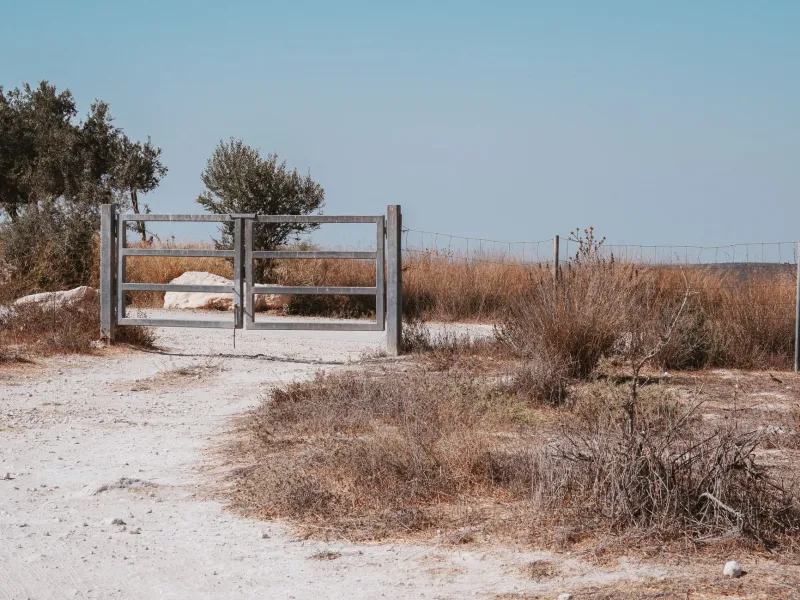
Consider a scenario that plays out with regularity across states like Montana, Texas, and Tennessee: a buyer purchases forty acres of timber land at what appears to be a favorable price. The listing mentions a dirt road running through the neighboring property, and the seller confirms that access has never been a problem. Closing proceeds without incident. Six months later, the neighboring landowner sells, and the new owner erects a gate — legally, because no recorded easement ever existed.
The original buyer now owns property they cannot reach without trespassing. Their options are limited and expensive: negotiate a new easement agreement with an unwilling neighbor, pursue a legal action for an easement by necessity, or accept that the land's utility has been dramatically diminished.
In many states, courts will recognize an implied easement or an easement by necessity when a parcel has no other means of access, but litigation is slow, uncertain, and costly. Prevention through proper due diligence is always the superior strategy.
Utility Easements and Development Constraints
Even when road access is clearly established, utility easements can impose significant limitations on what a buyer can build and where. Power line corridors, natural gas pipelines, fiber optic routes, and water authority easements all restrict the use of the land within their designated corridors. Construction within these corridors is typically prohibited, and in some cases, vegetation management requirements apply to land adjacent to the easement boundary.
A buyer intending to construct a home on a rural parcel may discover after closing that the most logical building site sits directly beneath a high-voltage transmission line easement. The site is not unusable, but the placement options for a structure are severely constrained, and the aesthetic impact is considerable.
Utility easements are often wide — transmission line corridors can span fifty to one hundred fifty feet or more — and they may not be visible on a standard property map. Locating them requires a thorough title search, a review of recorded plats, and in some cases, direct inquiry with the relevant utility companies.
Right-of-Way Agreements and Their Long-Term Implications
Right-of-way agreements, which grant a party the right to pass through or use a strip of land for transportation or infrastructure purposes, can affect both access and value in complex ways. A recorded right-of-way in favor of a county or state agency may facilitate road maintenance — which benefits the landowner — but it may also limit the owner's ability to fence, gate, or otherwise control that portion of the property.
Pipeline right-of-way agreements, which are particularly prevalent in states with active oil and gas industries, can be recorded against a property for decades and may include provisions that allow the pipeline company to re-enter the land for inspection, maintenance, or expansion with limited notice to the owner.
Understanding the terms of any existing right-of-way agreement — not merely its existence — is essential. The specific language of the agreement governs what the easement holder can and cannot do, and that language varies considerably from one agreement to the next.
A Due Diligence Checklist for Easement Review
Before closing on any remote or rural parcel, buyers should work through the following steps with the assistance of a qualified real estate attorney and, where appropriate, a licensed land surveyor.
1. Order a comprehensive title search. A title search conducted by a reputable title company will identify recorded easements, right-of-way agreements, and access restrictions associated with the property. Do not rely on a seller's disclosure alone.
2. Review the title commitment carefully. The title commitment will list all exceptions to coverage, which typically include recorded easements. Read these exceptions thoroughly and request copies of any underlying documents.
3. Obtain a current survey. A boundary survey will identify the legal boundaries of the parcel and may reveal encroachments or access issues not apparent from the deed. A topographic survey adds further detail relevant to development planning.
4. Verify legal access to a public road. Confirm that a recorded easement or deeded right-of-way provides documented legal access. Verbal assurances and historical use are not substitutes for recorded rights.
5. Contact utility companies directly. Request easement maps or locates from all utilities that may have infrastructure in the area. This step frequently surfaces easements that are recorded in formats not captured by a standard title search.
6. Research pipeline and transmission records. In states with active energy infrastructure, check state pipeline authority databases and county records for any recorded pipeline or transmission line agreements.
7. Consult with a local land use attorney. Easement law varies by state, and the implications of specific agreement language require legal interpretation. An attorney familiar with the local jurisdiction is an indispensable resource.
The Cost of Skipping the Details
Easement problems rarely announce themselves before closing. They surface later, often at the worst possible moment — when a buyer is ready to build, fence, develop, or sell. At that point, the options are typically expensive and the leverage is minimal.
Remote land carries its own rewards, and for buyers who approach the process with rigor and patience, it represents a genuinely compelling asset class. But the remoteness that makes these parcels attractive also means that access, utilities, and infrastructure cannot be taken for granted. Every assumption must be verified. Every document must be read.
At Lands99, we believe that informed buyers make better landowners. Finding your ground starts with knowing exactly what you are acquiring — not just the acres, but the rights that come with them.