Keeping the Acres: A Landowner's Roadmap to Passing Land Between Generations Without Losing It to Taxes or Discord
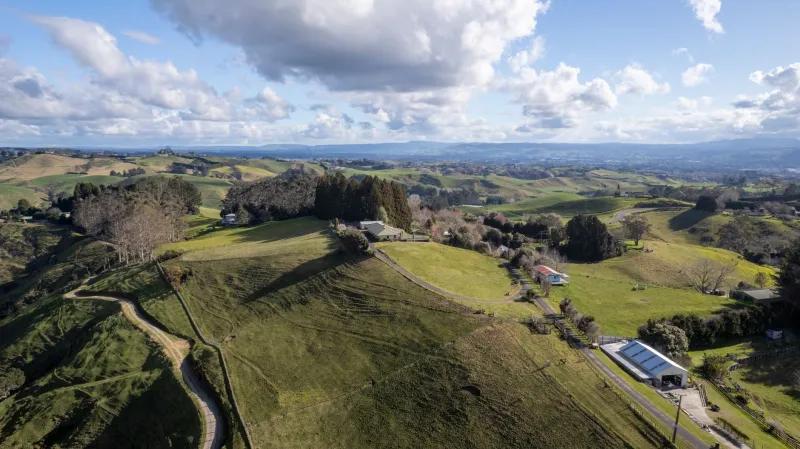
For many American families, land is more than an asset. It is the physical expression of a family's history — the fields where generations worked, the timber where children hunted, the pastures that funded educations and retirements. It carries weight that a stock portfolio or a savings account simply does not.
Yet without deliberate planning, that land is profoundly vulnerable at the moment of generational transfer. Estate taxes, disagreements among heirs, forced partition sales, and poorly structured ownership can dissolve in a matter of months what a family spent a lifetime accumulating. The families who keep their land intact across generations are not simply the luckiest — they are the most deliberately prepared.
The Tax Problem Is Real, and It Is Solvable
For 2024, the federal estate tax exemption sits at $13.61 million per individual, or $27.22 million for a married couple. At first glance, this appears to protect all but the wealthiest families. In practice, the picture is more complicated.
First, the current exemption levels are scheduled to revert to approximately half their current value at the end of 2025, absent congressional action. A family with 800 acres of agricultural land in a high-value market — say, irrigated farmland in the Central Valley or timber ground in the Pacific Northwest — may find that their land, despite generating modest annual income, carries an appraised value well above the post-sunset exemption threshold.
Second, state-level estate taxes complicate the calculation. States including Massachusetts, Oregon, Washington, and Maryland impose estate taxes with exemption thresholds as low as $1 million. A family holding land in these states faces exposure that federal exemptions do not address.
Third, and most critically, land is illiquid. A family inheriting a parcel with a $4 million estate tax bill cannot easily sell 20 percent of it to pay the obligation. The result, in many cases, is a forced sale of the entire parcel to a third party — often at a discount driven by the urgency of the transaction.
Structures That Work: An Overview
Several legal and financial instruments have proven effective at reducing estate tax exposure while preserving family control over land assets. No single structure is universally appropriate — the right approach depends on family size, land value, income needs, and long-term intentions — but the following represent the most widely used and legally validated strategies.
Family Limited Partnerships and Family Limited Liability Companies
A Family Limited Partnership (FLP) or Family Limited Liability Company (FLLC) allows a landowner to transfer ownership interests in land to heirs over time while retaining operational control. The landowner typically serves as the general partner or managing member, maintaining authority over land management decisions even as limited partnership or membership interests are gifted to children and grandchildren.
The tax advantage arises from valuation discounts. Because limited partnership interests carry restrictions on transferability and lack control over management decisions, the IRS generally accepts that they are worth less than their pro-rata share of the underlying asset's appraised value. Discounts of 20 to 40 percent are common and defensible, meaning a family can transfer substantially more land value per year under the annual gift tax exclusion — currently $18,000 per recipient for 2024 — than would otherwise be possible.
FLPs and FLLCs require careful documentation, ongoing adherence to formalities, and competent legal counsel. The IRS scrutinizes these arrangements, particularly when the transferor retains excessive control or commingles personal and entity finances. When properly structured and maintained, however, they are among the most powerful tools available for generational land transfer.
Conservation Easements as an Estate Planning Tool
A conservation easement permanently restricts development on a parcel in exchange for a charitable deduction equal to the difference between the land's unrestricted market value and its value under the easement's terms. For estate planning purposes, the easement serves a dual function.
First, it reduces the taxable value of the estate. Land that has been encumbered by a conservation easement is worth less for estate tax purposes — sometimes dramatically less — while remaining in the family's ownership and use. A cattle operation that might have been valued at $6 million as potential residential development land may carry an easement value of $2.5 million, reducing the estate tax exposure accordingly.
Second, an easement can generate a charitable income tax deduction that offsets income in the years of the donation. For a landowner with significant agricultural income, this deduction can be carried forward for up to 15 years.
The easement strategy works best for families who are genuinely committed to keeping land in agriculture, forestry, or conservation use. It is not reversible, and it permanently forecloses development options. Families who may need the flexibility to sell or develop the land in future generations should approach this tool with clear eyes.
Strategic Gifting and Irrevocable Trusts
The annual gift tax exclusion allows a landowner to transfer $18,000 per recipient per year without using any of the lifetime exemption. For a couple with three children and six grandchildren, that represents $162,000 in annual transfers — potentially a meaningful fraction of a parcel's value over a decade of systematic gifting.
For larger transfers, irrevocable trusts offer additional flexibility. A Grantor Retained Annuity Trust (GRAT) allows a landowner to transfer land into a trust, receive annuity payments for a defined term, and pass any appreciation above the IRS's assumed growth rate to heirs estate-tax-free. In a low-interest-rate environment, GRATs can be particularly efficient vehicles for transferring appreciating land assets.
A Qualified Personal Residence Trust (QPRT) operates on similar principles for a primary or secondary residence, though its application to raw land is more limited. An attorney specializing in estate planning and familiar with agricultural or rural land should evaluate which trust structure aligns with the family's specific circumstances.
The Human Dimension: Equity, Fairness, and Family Governance
No legal structure resolves the emotional complexity of generational land transfer on its own. Families in which one child manages the land actively while others hold passive interests must confront questions of fairness that financial instruments alone cannot answer.
Who receives management compensation? How are decisions about leasing, timber harvesting, or mineral development made? What happens when one heir needs liquidity and others do not? These questions, left unaddressed, have destroyed both land holdings and family relationships in equal measure.
The most successful multigenerational land families establish formal governance structures alongside their legal ownership arrangements. A family charter or operating agreement that defines decision-making processes, buy-sell provisions, and dispute resolution mechanisms provides a framework for navigating disagreements before they become irreparable.
Facilitated family meetings — sometimes conducted with the assistance of a professional mediator or family business consultant — allow the founding generation to communicate their intentions clearly and give heirs a voice in shaping the arrangement they will inherit. This process is not comfortable for every family, but it is almost always less painful than the alternative.
The Cost of Inaction
Land succession planning is not a task that improves with delay. The exemption thresholds that currently protect many families may be substantially reduced within the next two years. Property values in many rural markets have appreciated sharply, pushing more families above thresholds they would not have approached a decade ago.
Perhaps most importantly, the planning window for some strategies — particularly GRATs and systematic gifting programs — requires years to deliver their full benefit. A landowner who begins the process at age 80 has far fewer options than one who engages at 60.
At Lands99, we believe that finding your ground is only the beginning. Keeping it — across generations, through market cycles, and across the complexity of family life — is the real work of land ownership. The families who succeed at that work do not leave it to chance.