The Server Next Door: A Landowner's Guide to Data Center Offers on Rural Ground
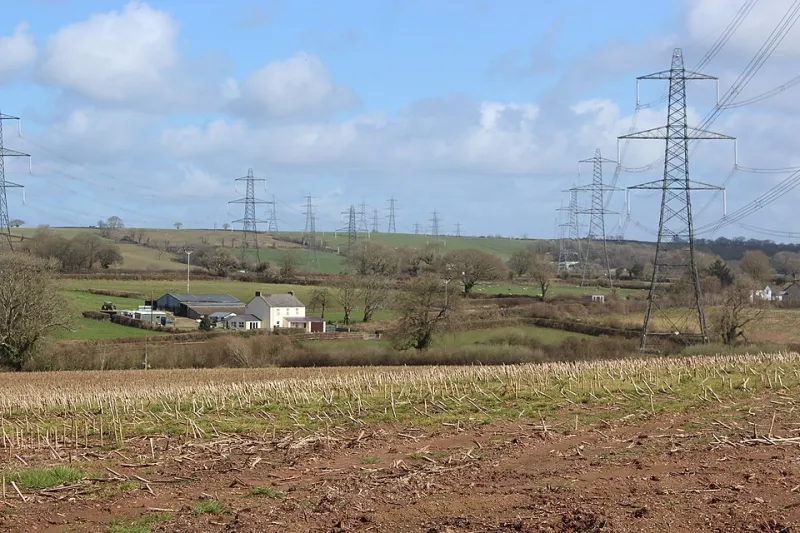
Photo: M J Roscoe , CC BY-SA 2.0, via Wikimedia Commons
Rural landowners have always fielded unsolicited offers. In 2026, a growing share arrive with a familiar set of names attached: hyperscale developers, utility consultants, site-selection firms, and investment vehicles assembling acreage for data centers. The pitch can sound flattering. The land is quiet, the power is available, and the buyer is willing to pay for an option before any shovel touches soil.
At Lands99, the question is not whether data centers are coming to rural America. They are. The question is whether a particular parcel can support a project without surrendering the owner's leverage, land-use rights, and long-term exit options in the process.
Why Rural Parcels Attract Hyperscale Projects
Data centers are not looking for scenery. They are looking for combinations that are increasingly scarce near cities: large contiguous acreage, reliable electric capacity, access to fiber, water for cooling or campus operations, and a local government willing to entertain industrial-scale development. Rural parcels often provide the first three at a lower land cost. The remaining two determine whether a project is realistic.
That is why a proposal can arrive before the developer has secured a utility commitment or a water source. The option agreement is often a way to tie up land while those questions are answered. For the landowner, that means the first document is not a purchase offer. It is a request for control.
The Option Agreement Is the First Real Decision
An option agreement gives a developer the right, but usually not the obligation, to buy a parcel within a set period. The landowner receives an option fee and, in many cases, a promise of a higher purchase price if the option is exercised. The details matter more than the headline number.
Landowners should scrutinize the option term, renewal periods, exclusivity, access rights, and the developer's right to assign the agreement to another entity. A long option with unilateral extensions can freeze the parcel for years while the developer pursues rezoning, utility studies, and community negotiations. A short option with clear milestones protects the owner from indefinite delay.
The agreement should also address what happens if the project fails. Are option payments nonrefundable? Does the developer have to restore the property after soil testing or site work? Is the owner reimbursed for legal and engineering costs? Can the landowner continue farming, hunting, or leasing the land during the option period? These are not minor details. They determine whether the owner retains productive use or merely holds a placeholder asset.
Rezoning and Local Politics
Most rural parcels are not zoned for hyperscale data centers. A proposal usually triggers a rezoning request, a conditional use permit, or a comprehensive plan amendment. The developer may ask the landowner to support the application or to sign a letter of intent. That support can be valuable, but it also ties the owner's reputation to a project the community may oppose.
Landowners should learn how the local planning department treats large utility and industrial loads. Some counties welcome the tax base. Others are tightening standards around noise, setbacks, water use, backup generators, and visual buffering. A project that looks straightforward at the state level can stall in a county meeting room.
Power, Water, and the Infrastructure Ledger
A data center proposal is largely an infrastructure proposal. The developer needs to know whether the local utility can deliver the required capacity, whether transmission upgrades are needed, and who pays for them. In many rural areas, the answer is not immediate. Interconnection queues can be long, and the cost of upgrades may fall partly on the utility's other customers.
Water is equally important. Cooling systems vary, but large campuses can require significant water withdrawals or wastewater discharge. The landowner should ask whether the project relies on groundwater, surface water, municipal supply, or a closed-loop system. If groundwater is involved, the owner should understand the local aquifer conditions and any pending water-rights disputes.
Community Pushback and Your Position
Rural data center projects often attract organized opposition. Neighbors may worry about noise, traffic, light pollution, diesel generators, water depletion, and the loss of agricultural character. Some concerns are overstated. Others are not. A landowner who signs early can become the public face of a project before the developer has answered basic questions.
That is why it is reasonable to ask for a community engagement plan before granting a long option. The owner should know who will attend public meetings, how complaints will be handled, and what happens if the project is denied. A developer who will not commit to that process may be treating the parcel as a cheap call option rather than a serious site.
Negotiating Leverage Before You Sign
Leverage comes from preparation. A landowner who knows the parcel's utility access, water conditions, road frontage, and zoning history can negotiate from evidence rather than hope. Contiguous acreage is valuable, but so is a parcel that can be assembled with neighbors. If several owners are approached, they should consider whether coordinated negotiations would produce better terms without violating antitrust or confidentiality obligations.
Key terms to negotiate include a higher option fee, milestone-based extensions, a decommissioning or restoration bond, a reverter clause if the project is not built, tax abatement protections, and a clear statement of what rights the developer acquires at closing. The owner should also retain the right to approve any assignment to a shell entity.
A Final Ground Check
A data center offer can be a legitimate opportunity for rural land. It can also be a years-long encumbrance with limited upside if the project never materializes. Before signing, a landowner should have counsel review the option, confirm the developer's identity and financial capacity, and map the utility and water questions that will decide the site's fate. The server may be next door eventually. The landowner's job is to make sure the contract reflects that possibility without mortgaging the ground to it.