Restricted Ground: What Federal and State Environmental Designations Really Mean for Your Land's Value and Potential
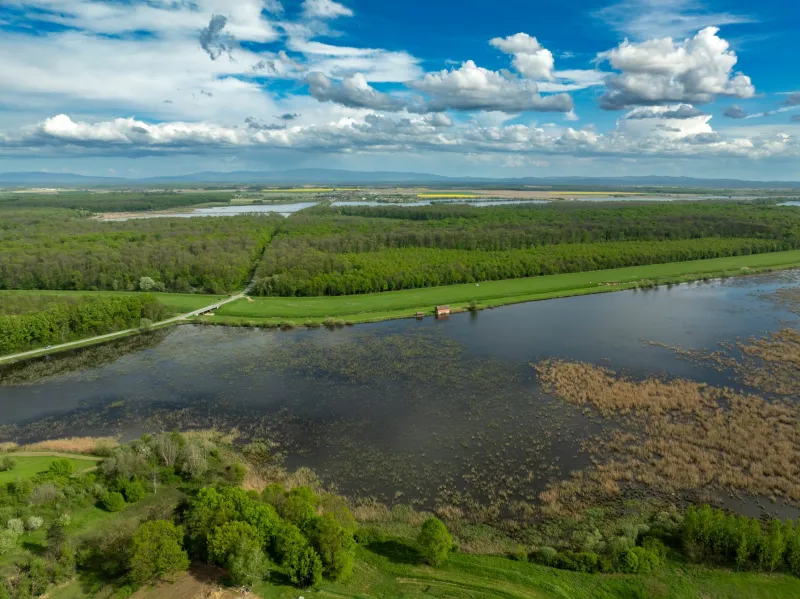
Not all acres are created equal, and not all restrictions are what they first appear to be. When a prospective buyer learns that a portion of a parcel carries a wetlands designation or falls within a listed species' critical habitat, the instinct is often to walk away. That reaction, while understandable, can cause investors and landowners to abandon properties that — with proper analysis and strategic planning — could deliver substantial returns through channels they had not considered.
Environmental restrictions on land use are among the most misunderstood factors in American real estate. They are neither uniformly devastating nor uniformly manageable. They occupy a nuanced middle ground that rewards landowners who take the time to understand exactly what they are dealing with.
The Regulatory Landscape: Who Controls What
Environmental restrictions on private land in the United States originate from multiple overlapping authorities, and sorting them out is the first task any serious land buyer or owner must complete.
At the federal level, two statutes dominate the conversation. The Clean Water Act, administered largely through the U.S. Army Corps of Engineers and the Environmental Protection Agency, governs wetlands and other waters of the United States. Any landowner seeking to fill, dredge, or significantly alter a jurisdictional wetland must obtain a Section 404 permit — a process that can take months or years and may ultimately be denied. The Endangered Species Act, administered by the U.S. Fish and Wildlife Service and the National Marine Fisheries Service, prohibits the "take" of listed species and can impose restrictions on land use within designated critical habitat areas even when no listed animal has been directly observed on the property.
State-level protections add another layer. California, Florida, New York, and Massachusetts, among others, maintain their own wetlands protection statutes that are frequently more stringent than federal standards. A parcel that clears federal review may still face significant state-level constraints.
Local regulations — floodplain ordinances, riparian buffer requirements, tree preservation codes — complete the picture. In many jurisdictions, these local rules have teeth that rival their state and federal counterparts.
Identifying Restrictions Before You Close
The time to discover environmental constraints is before the purchase agreement is signed, not after. Several tools are available to buyers conducting preliminary due diligence.
The National Wetlands Inventory (NWI), maintained by the U.S. Fish and Wildlife Service, provides a publicly accessible mapping layer that identifies probable wetland areas based on soil type, hydrology, and vegetation data. The NWI is a screening tool, not a legal determination — a parcel that appears wetland-free on the NWI map may still contain jurisdictional wetlands upon field investigation — but it is an essential first step.
FEMA's Flood Map Service Center provides access to National Flood Insurance Program maps, identifying Special Flood Hazard Areas that carry their own development constraints and insurance requirements.
For endangered species exposure, the U.S. Fish and Wildlife Service's IPaC (Information for Planning and Consultation) tool allows users to enter a project location and receive a report on listed species and critical habitat designations that may apply.
None of these tools replaces a professional wetland delineation conducted by a qualified environmental consultant. If a parcel carries any indication of wetlands, riparian areas, or listed species habitat, commissioning a delineation and a preliminary species survey before closing is money well spent. The cost — typically ranging from a few hundred dollars for a small parcel review to several thousand for a comprehensive field investigation — is trivial compared to the cost of discovering post-closing that half a parcel's acreage is effectively undevelopable.
When Restrictions Appear: Pathways Forward
A wetlands determination or a species habitat designation does not necessarily mean the land cannot be developed or improved. Several legitimate pathways exist within the regulatory framework.
Mitigation banking and permitting. The Section 404 permit process allows for wetland impacts if the applicant demonstrates avoidance and minimization of impacts and provides compensatory mitigation — typically through the purchase of wetland mitigation bank credits. For development projects where a portion of the site is wetland, this pathway allows construction to proceed on upland areas while wetland impacts are offset elsewhere in the watershed.
Programmatic agreements and habitat conservation plans. Under the Endangered Species Act, landowners whose projects may affect listed species can negotiate an Incidental Take Permit supported by a Habitat Conservation Plan (HCP). An approved HCP provides regulatory certainty — the landowner agrees to specific conservation measures, and in return receives assurance that future regulatory changes will not impose additional burdens. These agreements require legal and biological expertise to negotiate, but they have enabled significant development projects in areas where a listed species was initially seen as an absolute barrier.
Upland development with wetland preservation. In many cases, a parcel contains both constrained and unconstrained acreage. A skilled land planner can identify a development envelope that concentrates improvements on upland areas while preserving wetlands as open space, stormwater management features, or conservation amenities. This approach not only navigates regulatory requirements but can actually enhance the marketability of a development by incorporating natural features.
The Counterintuitive Value Play: When Conservation Increases Worth
Perhaps the most important concept for landowners to understand is that environmental designations do not uniformly reduce property value. In certain markets and ownership structures, they can substantially increase it.
Conservation easements — voluntary legal agreements that permanently restrict development on a parcel in exchange for a charitable deduction based on the diminution in value — have made financial sense for landowners in high-value agricultural and natural resource markets. A ranch carrying significant wetlands acreage may be poorly suited for subdivision but exceptionally well suited for a conservation easement transaction that delivers a tax deduction worth multiples of the land's sale value.
Wetlands and riparian corridors also support hunting and fishing opportunities that underpin the growing land-lease market. A parcel that cannot be subdivided into residential lots may generate consistent annual income through waterfowl hunting leases, fishing access agreements, or ecotourism arrangements. In states like Arkansas, Louisiana, and Missouri, bottomland hardwood wetlands command significant lease premiums precisely because of their ecological character.
Finally, federal and state conservation programs — including the USDA's Wetland Reserve Easement program under the Farm Bill — provide direct payments to landowners who voluntarily enroll eligible wetland acres. These programs effectively convert a development constraint into a revenue stream.
Due Diligence as a Competitive Advantage
Land buyers who understand environmental restrictions in depth move through the market with a significant advantage over those who react to them emotionally. A parcel priced at a discount because of perceived environmental constraints may, upon thorough analysis, reveal development pathways or conservation revenue opportunities that justify a purchase the uninformed buyer avoided.
At Lands99, we encourage every buyer and seller to treat environmental due diligence not as a bureaucratic hurdle but as an intelligence-gathering exercise. The landowner who understands exactly what the ground beneath their feet can and cannot accommodate is the landowner who makes decisions — and returns — that others cannot replicate.