The Industrial Land Awakening: Why Secondary Markets Are Becoming America's Most Valuable Commercial Ground
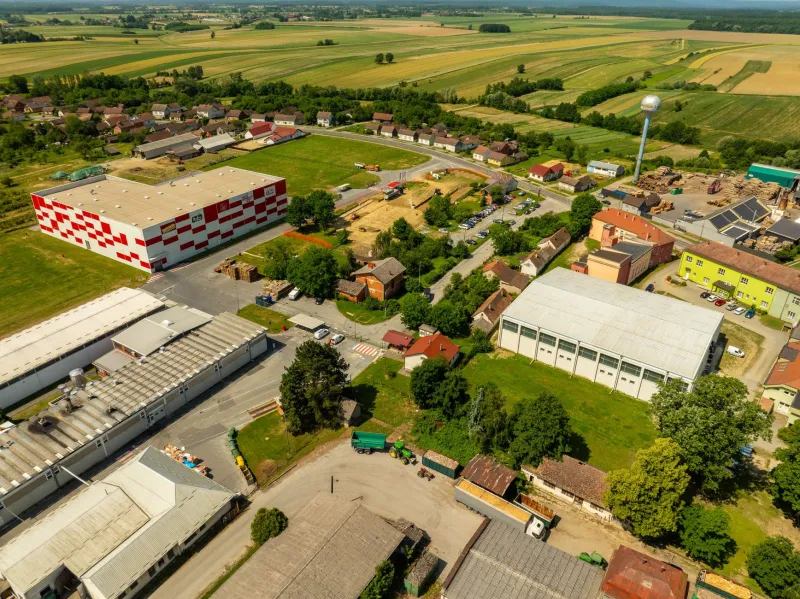
For most of the past three decades, the conventional wisdom governing industrial real estate was straightforward: proximity to major ports, dense population centers, and interstate interchange nodes determined value. Infill industrial land near the Port of Los Angeles, the Chicago rail hub, or the New Jersey distribution corridor commanded premiums that reflected the irreplaceable nature of those locations. Investors who understood this concentrated their capital accordingly.
That logic has not been invalidated—but it has been substantially complicated. The supply chain disruptions of the early 2020s, combined with accelerating reshoring of manufacturing activity and a fundamental rethinking of inventory strategy by major corporations, have created a new geography of industrial demand. And in that new geography, the most compelling opportunities are frequently found not in the nation's established logistics hubs, but in the secondary and tertiary markets that surround them.
This is not a minor adjustment at the margins. It is a structural reorientation of where industrial land value is being created, and it deserves the serious attention of every investor with exposure to commercial real estate.
The Forces Driving Decentralization
To understand why secondary markets are gaining ground, it is necessary to understand the forces reshaping industrial location decisions at the corporate level.
Reshoring and nearshoring have moved from policy aspiration to operational reality for a significant number of American manufacturers. Legislation including the CHIPS and Science Act, the Inflation Reduction Act's domestic manufacturing incentives, and the Infrastructure Investment and Jobs Act have collectively directed hundreds of billions of dollars toward domestic industrial capacity. The facilities built to absorb this investment require land—often large parcels of 50 to 500 acres—and that land must be available, affordable, and appropriately zoned. In the nation's established industrial markets, sites meeting those criteria are increasingly scarce and prohibitively expensive. In secondary markets, they remain accessible.
Labor market considerations have reinforced this dynamic. The tight labor markets of major metropolitan areas, combined with higher wages and greater union density, have made workforce economics in mid-size cities and rural industrial corridors considerably more attractive to manufacturers evaluating site selection. Markets in the Southeast, the Midwest, and the Mountain West that offer skilled manufacturing workforces at competitive wage rates are appearing with increasing frequency on corporate shortlists.
Supply chain redundancy has become a strategic imperative rather than an operational luxury. After experiencing the consequences of concentrated, single-node distribution networks, major retailers and manufacturers have adopted hub-and-spoke models that deliberately place inventory closer to end consumers in regional markets. This shift generates demand for industrial land in markets that were previously considered too small to attract institutional-grade distribution facilities.
Energy infrastructure is an underappreciated driver of industrial location in the current environment. Data centers, electric vehicle manufacturing plants, and advanced semiconductor facilities require enormous quantities of reliable electrical power. The regions where that power is available at scale—parts of the mid-South, the Great Plains, and the interior West—are attracting industrial investment that would have been unthinkable a decade ago.
Which Markets Are Capturing the Opportunity
The secondary markets currently drawing the most serious industrial investment attention share a recognizable profile: interstate highway access, rail connectivity, affordable and available large-format land, favorable regulatory environments, and proximity to a growing regional population base.
The Southeast industrial corridor extending through Tennessee, Alabama, Georgia, and the Carolinas has absorbed an extraordinary volume of automotive and advanced manufacturing investment over the past several years. The Volkswagen facility in Chattanooga, the Toyota-Mazda plant in Huntsville, and the proliferating battery manufacturing campuses across the region have created cascading demand for supplier facilities, warehousing, and logistics infrastructure in surrounding counties. Land that was priced as agricultural or rural residential five years ago is now being evaluated as industrial.
The Midwest manufacturing belt is experiencing a genuine revival in select corridors. Ohio, Indiana, and Michigan are benefiting from semiconductor manufacturing investment and the broader electrification of the automotive sector. Markets like Columbus, Fort Wayne, and the I-69 corridor in Indiana are attracting distribution and light manufacturing activity from companies seeking to serve the eastern half of the country from a central position.
The Texas interior, beyond the well-documented growth of the Dallas-Fort Worth metroplex, is generating industrial demand in markets like Laredo, Waco, and the Permian Basin periphery. Cross-border trade flows, energy sector activity, and the overflow of logistics demand from saturated DFW submarkets are all contributing to appreciation in industrial land values across a wide geographic range.
The intermountain West is emerging as a significant data center and advanced manufacturing destination, driven by available land, renewable energy resources, and lower operating costs relative to coastal markets. Communities in Nevada, Utah, Idaho, and Wyoming are competing aggressively for industrial investment with incentive packages and streamlined permitting processes.
Why Location Advantage Has Been Redefined
The traditional framework for evaluating industrial land value centered on a relatively small set of variables: port access, rail infrastructure, and proximity to the largest consumer markets. In that framework, secondary markets were structurally disadvantaged and priced accordingly.
The new framework is considerably more nuanced. Fiber optic connectivity, renewable energy availability, water rights, and workforce quality have joined transportation access as primary determinants of industrial site value. In several of these dimensions, secondary markets hold genuine competitive advantages over their gateway counterparts.
Moreover, the economics of logistics have evolved. The build-out of the interstate highway system means that a distribution center in central Tennessee or eastern Kansas can reach a substantial percentage of the American population within a two-day truck transit window—a threshold that satisfies the expectations of modern e-commerce consumers. Geographic centrality, once a secondary consideration, has become a primary one.
Positioning Ahead of Major Announcements
For investors seeking to capitalize on this structural shift, the central challenge is timing. The most significant appreciation in industrial land values typically occurs in the period between a major corporate site selection decision and its public announcement. By the time a press release confirms a new manufacturing campus or distribution center, land prices in the affected area have frequently already moved.
Monitoring state economic development agency activity, utility interconnection applications, and environmental review filings can provide early signals of pending announcements. Relationships with local commercial brokers and economic development professionals in target markets are invaluable for accessing information that has not yet reached institutional investors.
Parcels with direct highway access, adequate acreage for industrial-scale development, and favorable zoning—or realistic paths to rezoning—should be evaluated as acquisition candidates in any market exhibiting the structural characteristics described above. The carrying costs of industrial land are manageable, and the asymmetric upside of owning well-located acreage ahead of a major corporate announcement is substantial.
A Moment That Will Not Last Indefinitely
Secondary market industrial land is not undervalued because it lacks merit. It is undervalued because institutional capital has historically been slow to move beyond familiar geographies. That inertia is now breaking down under the pressure of supply constraints in primary markets and the compelling economics of secondary alternatives.
The investors who act on this analysis before the institutional herd arrives will find themselves holding ground that the next decade of American industrial expansion will be built upon. At Lands99, we believe that finding your ground—before the market finds it for you—is the defining act of intelligent land investment.
Search industrial and commercial land listings in high-growth secondary markets at Lands99.com.