Acres Ahead of the Curve: The Quiet Wealth Strategy Reshaping Rural Real Estate in 2025
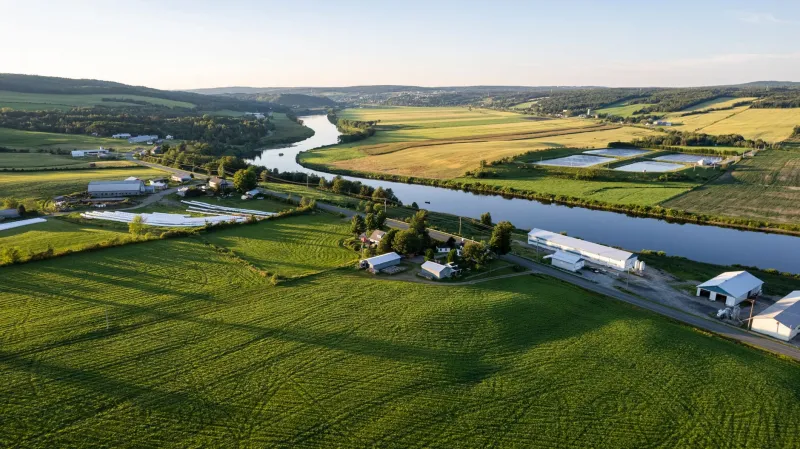
There is a particular kind of investor who does not wait for the crane to arrive before buying. They study highway expansion maps, monitor county zoning amendments, and track where data centers are quietly acquiring power easements. By the time a market makes the evening news, they have already closed on their acreage and are watching appreciation accumulate.
This is land banking—and in 2025, it may represent one of the most compelling long-term wealth strategies available to American investors willing to look beyond the urban core.
What Land Banking Actually Means
At its most fundamental level, land banking is the practice of purchasing raw, undeveloped, or underutilized land in areas projected to experience significant growth, then holding that land until market conditions justify development or resale. The strategy is neither new nor exotic—municipal governments have practiced versions of it for decades—but its adoption among private investors has accelerated considerably as traditional residential and commercial real estate markets have grown increasingly competitive.
Unlike a rental property, raw land generates no monthly income in most configurations. Its value proposition is almost entirely rooted in appreciation, and appreciation in land markets is driven by a specific set of catalysts: infrastructure investment, population migration, corporate relocation, and rezoning activity. Understanding how to identify those catalysts before they become public knowledge is the skill that separates disciplined land bankers from speculative gamblers.
The Financial Mechanics: Why Land Outperforms in the Right Conditions
Consider the comparative structure of land ownership versus income-producing real estate. A rental property in a mid-size Sunbelt city might generate a 5 to 7 percent annual cash-on-cash return, but it also carries maintenance obligations, tenant management, property taxes, and insurance. Raw acreage in a growth corridor, by contrast, carries minimal carrying costs—often just property taxes and basic liability coverage—while delivering outsized appreciation if the underlying thesis proves correct.
Historically, land in high-growth corridors has appreciated at rates that dwarf inflation and frequently exceed equity market returns over ten-year holding periods. A 40-acre parcel acquired in the exurban fringe of Austin, Texas, in 2012 for $4,000 per acre would have been worth multiples of that figure by 2022 as the metropolitan footprint expanded outward. Similar patterns have played out in the outer rings of Nashville, Phoenix, Raleigh, and increasingly in secondary markets across the Mountain West and Gulf Coast.
The leverage available on raw land purchases is typically lower than on improved property—lenders are more conservative without structures to collateralize—but investors who can acquire with cash or seller financing often find that the absence of debt service pressure actually strengthens their holding position.
Identifying Prime Opportunities Before Developers Arrive
The critical question, of course, is how to identify the right parcels before the market prices in the opportunity. Experienced land bankers rely on a layered analysis that combines public data with on-the-ground observation.
Infrastructure signals are among the most reliable early indicators. When the Federal Highway Administration approves a new interchange, or when a state DOT publishes a long-range transportation plan, the land within a two-to-five-mile radius of projected nodes immediately enters a window of opportunity. Environmental impact statements, utility corridor filings, and broadband expansion grants all function as early warning systems for investors paying attention.
Population flow data has become increasingly granular and accessible. Migration patterns tracked through IRS address-change filings, U-Haul destination data, and Census Bureau estimates can reveal which rural counties are absorbing outmigration from expensive metros before that shift registers in local land prices. Counties in the Carolinas, Tennessee, and the Florida Panhandle have shown this pattern repeatedly over the past decade.
Zoning and comprehensive plan amendments are perhaps the most direct signal available. When a county commission votes to update its future land use map—reclassifying agricultural parcels to residential or mixed-use categories—it is effectively telegraphing where growth is anticipated. These documents are public record and are rarely scrutinized by retail investors.
Corporate site selection activity can be tracked through state economic development agency announcements, industrial broker reports, and utility interconnection filings. A major manufacturing facility or distribution center announcement does not emerge from nothing; the site selection process takes years, and attentive investors can often identify finalist corridors before the ribbon-cutting.
The Holding Period Discipline
Land banking is not a strategy for investors who need liquidity. The holding periods that generate meaningful returns typically range from five to fifteen years, and there will be stretches within that window when the land appears to be doing nothing. This is where most inexperienced investors falter—they interpret inactivity as failure and exit prematurely, often just ahead of the inflection point.
Successful land bankers treat their acreage as a long-duration asset, similar in temperament to a Treasury bond but with asymmetric upside. They budget their carrying costs conservatively, resist the temptation to over-improve the property, and maintain financial reserves sufficient to hold through economic downturns without being forced to sell.
Some investors generate interim income from their holdings through agricultural leases, timber rights, hunting licenses, or cell tower ground leases—arrangements that cover carrying costs without compromising the land's development potential.
Due Diligence: What You Cannot Afford to Skip
No land banking strategy survives poor due diligence. Before committing capital to any rural parcel, investors should commission a current survey, obtain a title search and title insurance, verify access rights and road frontage, assess soil composition and drainage characteristics, and confirm the availability of utilities or the feasibility of well and septic installation.
Environmental assessments are particularly important for parcels with any prior agricultural or industrial use. Wetlands delineations, floodplain mapping, and endangered species habitat evaluations can all materially affect a parcel's development potential and should be completed before closing, not after.
Positioning for the Next Wave
The development boom most land bankers are watching in 2025 is being shaped by three converging forces: the continued decentralization of American population centers, the massive federal investment in infrastructure and clean energy, and the reshoring of industrial and manufacturing activity to domestic soil. Each of these trends generates demand for land in locations that were, until recently, considered peripheral.
For investors willing to do the analytical work, acquire with discipline, and hold with conviction, the acreage available today in the nation's growth corridors represents a generational opportunity. The crane will arrive eventually. The question is whether you own the ground beneath it when it does.
Explore available rural acreage and development-ready parcels across the country at Lands99.com.