The Invisible Asset: How Water Rights Determine the True Worth of Rural Land
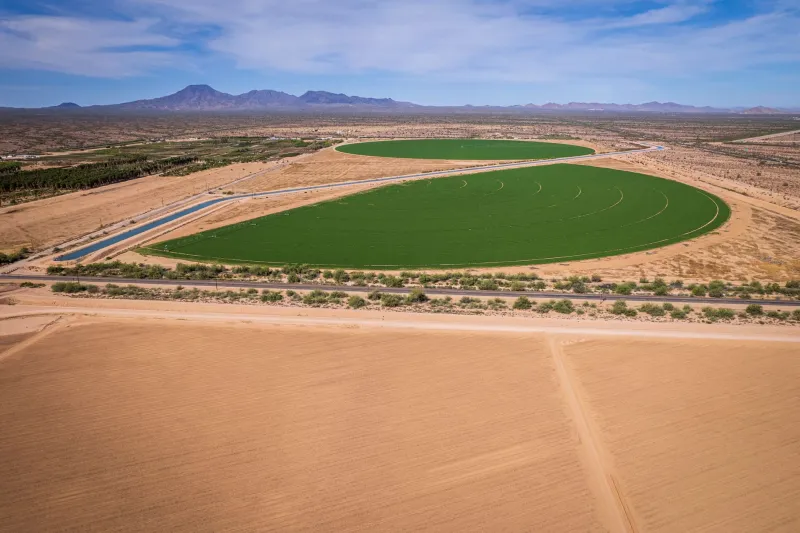
When buyers walk a piece of rural property, they tend to focus on what they can see — timber stands, soil quality, road access, and the lay of the land itself. What they often fail to examine with equal rigor is something far less visible, yet potentially more valuable: water rights. In the western United States especially, but increasingly across the country, the legal right to use water on or beneath a parcel can elevate or devastate its market value in ways that no surface inspection will reveal.
For agricultural buyers, developers, and recreational investors alike, water rights are not a secondary concern. They are frequently the central one.
Two Legal Frameworks, Fifty Variations
The United States does not operate under a single, unified water law. Instead, the country is broadly divided into two legal traditions, each with its own logic and its own implications for land buyers.
Eastern states generally follow the riparian doctrine, which grants landowners the right to use water from streams, rivers, or lakes that border or pass through their property. Under this framework, rights are tied to land ownership and typically do not require a separate permit. The right exists as long as the land is owned and the use is considered "reasonable" relative to other riparian users.
Western states, where water scarcity has historically shaped settlement and agriculture, largely operate under the prior appropriation doctrine — commonly summarized as "first in time, first in right." Under this system, water rights are separate legal entitlements, independent of land ownership, that are allocated based on historical use and seniority. A senior water right holder can legally claim their full allocation before any junior right holder receives a single gallon, even during drought years.
Several states, including California, Kansas, and Nebraska, operate under hybrid systems that incorporate elements of both doctrines. The result is a patchwork of regulations that demands state-specific expertise before any purchase decision is finalized.
Why Buyers Consistently Undervalue Water
There are a few reasons water rights get shortchanged in due diligence. First, they are intangible — a set of legal entitlements that do not appear on a topographic map or show up in a drone flyover. Second, many buyers, particularly those purchasing rural land for the first time, are simply unaware of how water rights are documented, transferred, and adjudicated. Third, sellers are not always forthcoming about the limitations or encumbrances attached to their water access.
The consequences of this oversight can be severe. A buyer who purchases irrigated farmland in Colorado or Arizona without verifying the seniority and annual yield of the associated water rights may find that during a dry summer — precisely when irrigation is most critical — their rights are curtailed entirely while senior holders upstream continue drawing uninterrupted. In some cases, buyers have purchased land with no transferable water rights whatsoever, only to discover that the previous owner had been drawing from a neighbor's allocation under an informal agreement that did not survive the sale.
Conducting Proper Water Due Diligence
A thorough water rights review begins well before closing and requires more than a cursory glance at the title report. Buyers should consider the following steps as non-negotiable components of their due diligence process.
Obtain a water rights title search. In prior appropriation states, water rights are recorded separately from land titles and administered through state water courts or engineer offices. A qualified water rights attorney or title company specializing in water law can search these records and identify what rights are appurtenant to the property, what their priority date is, and whether any liens, encumbrances, or decrees affect them.
Verify actual yield versus paper rights. A water right may legally entitle the holder to a specific number of acre-feet per year, but actual delivery depends on the physical availability of water in the source and the competing demands of senior users. Buyers should request historical diversion records from the relevant state agency and, where possible, consult with neighboring landowners or local irrigation districts about real-world conditions.
Assess groundwater separately. Surface water rights and groundwater rights are governed by different legal frameworks in most states. A property may have robust riparian access to a stream while sitting atop an aquifer that is already over-allocated or subject to state-imposed pumping restrictions. In regions where groundwater levels are declining — parts of the High Plains Aquifer system being a prominent example — this is an increasingly consequential distinction.
Understand transferability. Not all water rights transfer automatically with a land sale. In some states, rights must be formally transferred through a separate legal process, and certain uses may be restricted or require regulatory approval. Confirming that the rights will actually convey — and in the form the buyer expects — is essential.
The Value Calculus for Different Land Uses
The financial stakes of water rights vary considerably depending on the intended use of the property.
For agricultural buyers, water is often the primary productive input. Dryland farming operations and irrigated operations are not comparable assets, and the presence of a senior, high-yield water right can add tens of thousands of dollars per acre to a property's value in water-scarce regions. In the Colorado River basin, water rights have traded independently for prices that rival the land itself.
For developers, water availability determines feasibility. A parcel that appears ideally situated for a residential subdivision or commercial development may be unbuildable if municipal water service is unavailable and private well permits are restricted. Understanding the local groundwater permitting environment before acquiring development land is not optional — it is foundational.
For recreational buyers seeking hunting, fishing, or retreat properties, surface water access can be the defining amenity. Riparian corridors attract wildlife, support diverse ecosystems, and command significant premiums. But buyers should verify that the water they are purchasing access to is legally accessible, not subject to upstream diversion that could reduce flows seasonally, and not encumbered by easements that limit private enjoyment.
A Competitive Advantage for Informed Buyers
In a market where rural land values are being driven upward by a convergence of agricultural demand, remote-work migration, and infrastructure investment, the buyers who understand water are the ones best positioned to identify undervalued parcels and avoid overpriced ones. A property with unrecognized water assets may be priced below its true market value by a seller who does not fully appreciate what they hold. Conversely, a parcel marketed as "irrigated acreage" may carry paper water rights that provide far less practical benefit than the listing implies.
The due diligence gap around water rights is, in a meaningful sense, an opportunity. Buyers who invest the time and professional resources to understand water law in their target market — whether that means retaining a water rights attorney, consulting with state water agencies, or working with a land broker who specializes in agricultural and rural transactions — gain a genuine analytical edge.
At Lands99, we consistently advise buyers to treat water rights not as a footnote in the purchase process, but as a headline item. The ground beneath your feet may define the property. The water that flows through it, or beneath it, may define its value.
Before finalizing any rural land transaction, consult a licensed real estate attorney with expertise in water law in the relevant state. Water rights regulations vary significantly by jurisdiction and are subject to change.