Beyond the Bank: Financing Raw Land When Conventional Lenders Won't Play Along
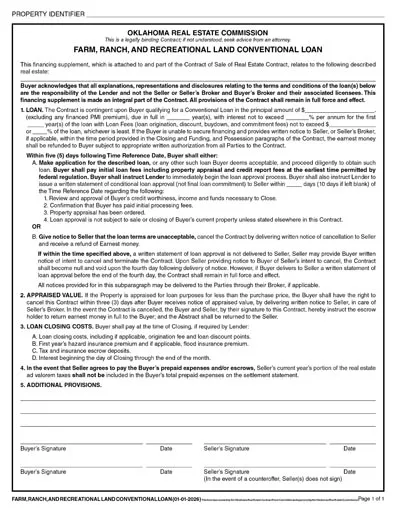
Photo: rural land financing bank loan documents farmland property investment, via oklahoma.gov
For buyers accustomed to the residential mortgage process, the experience of seeking financing for raw land can be genuinely disorienting. The same institutions that readily extend home loans worth hundreds of thousands of dollars will often decline to finance a modestly priced parcel of undeveloped ground—or will offer terms so unfavorable that the transaction ceases to make economic sense. Understanding why this happens, and what options exist beyond the conventional lending channel, is one of the most practically useful bodies of knowledge a land buyer can develop.
The raw land financing market operates according to its own logic, populated by a different cast of lenders, structured around different risk assumptions, and rewarding buyers who approach it with preparation and flexibility.
Why Conventional Lenders Hesitate on Raw Land
Conventional mortgage lenders—including banks, credit unions, and the secondary market institutions that purchase conforming loans—evaluate loan applications through the lens of collateral value and liquidation risk. In the event of borrower default, a lender holding a mortgage on a residential property can foreclose, list the home, and recover a substantial portion of the outstanding balance in a reasonably predictable timeframe. The resale market for finished homes is liquid, well-documented, and relatively efficient.
Raw land presents a fundamentally different collateral profile. An undeveloped parcel generates no income. Its value depends heavily on future use potential, which is subject to zoning changes, infrastructure availability, regulatory approvals, and market conditions that may shift over time. The pool of buyers capable of and interested in purchasing raw land in any given submarket is considerably smaller than the pool of home buyers, which means that a lender forced to liquidate raw land collateral faces a longer timeline and greater price uncertainty than they would with improved residential property.
For these reasons, conventional lenders that do extend raw land financing typically impose more stringent terms: larger down payments (often 30 to 50 percent of the purchase price), shorter loan terms, higher interest rates, and more extensive documentation requirements. Fannie Mae and Freddie Mac, the government-sponsored enterprises that purchase most conventional residential mortgages, do not purchase raw land loans, which removes the secondary market incentive that makes home lending attractive to banks in the first place.
The result is a financing environment in which the most accessible tools for home buyers are largely unavailable to land buyers—and in which creativity, preparation, and relationship-building become competitive advantages.
Seller Financing: The Most Accessible Alternative
In raw land transactions, seller financing—also called owner financing or a land contract—is frequently the most accessible and flexible funding mechanism available. Under this arrangement, the seller acts as the lender, accepting a down payment and receiving the balance of the purchase price in installments over an agreed-upon term, with interest. The seller retains a security interest in the property until the loan is repaid in full.
Seller financing is particularly common in rural land markets, where a significant portion of sellers are individual landowners rather than institutional entities, and where local banking relationships may be limited. For buyers, the advantages are considerable: qualification criteria are typically less rigid than bank standards, closing costs are lower, terms are negotiable, and the transaction can close more quickly than one involving a conventional lender.
From the seller's perspective, owner financing can offer tax advantages through installment sale treatment, which spreads capital gains recognition over the payment period rather than concentrating it in the year of sale. This alignment of interests—buyer seeking accessible financing, seller seeking favorable tax treatment and a reliable income stream—makes seller financing a genuine win-win in many transactions.
Buyers pursuing seller financing should engage a real estate attorney to draft or review the promissory note and security agreement, ensure the arrangement is properly recorded, and understand the implications of default provisions. The informality that makes seller financing attractive can also create legal ambiguity if the terms are not clearly documented.
USDA Farm Service Agency and Rural Development Loans
For buyers acquiring agricultural land or rural property with specific qualifying characteristics, the United States Department of Agriculture offers loan programs that deserve serious consideration. The Farm Service Agency's Farm Ownership Loans are available to eligible farmers and ranchers for the purchase of farmland, and the agency's direct loan programs include options for beginning farmers who may not qualify for conventional agricultural credit.
The USDA Rural Development program also administers housing and community facilities loan programs that, depending on the intended use of the property, may apply to rural land acquisitions. These programs carry income and geographic eligibility requirements that buyers must evaluate against their specific circumstances, but the terms—including competitive interest rates and longer repayment periods—can be meaningfully more favorable than what is available through commercial lenders for comparable properties.
Local and Community Banks: A Closer Look
While major national banks and mortgage lenders are generally poor candidates for raw land financing, community banks and agricultural credit institutions with deep roots in specific geographic markets often take a more nuanced view. A community bank in a rural Texas county or an agricultural lender serving the Midwest farm belt understands local land values, knows the regional market, and has relationships with borrowers that inform its credit decisions in ways that a national underwriting algorithm cannot replicate.
The Farm Credit System—a network of federally chartered lending institutions specifically designed to serve agricultural and rural borrowers—is another resource that land buyers frequently overlook. Farm Credit lenders, including AgriBank, CoBank, and their affiliated associations, specialize in agricultural real estate, rural land, and related lending. Their underwriting criteria are calibrated to land assets rather than residential properties, and their loan officers typically have direct experience with the types of transactions land buyers are pursuing.
Building a relationship with a community bank or Farm Credit lender before a specific transaction arises is a strategy that experienced land investors employ deliberately. Lenders who know a borrower's financial history, track record, and business plan are more likely to extend favorable terms than those evaluating a cold application.
Hard Money and Private Lenders
For buyers who need speed, flexibility, or financing that does not fit conventional credit profiles, hard money lenders and private capital sources offer an alternative worth understanding—though one that comes with important tradeoffs. Hard money loans are asset-based, meaning the lender evaluates the collateral primarily rather than the borrower's creditworthiness. They close quickly, require minimal documentation, and can accommodate unconventional property types.
The cost of this flexibility is significant. Hard money interest rates typically range from 8 to 15 percent or higher, terms are short (often one to three years), and origination fees add to the total cost of borrowing. These instruments are generally most appropriate as bridge financing—a mechanism to acquire a parcel quickly while longer-term financing is arranged or while the buyer completes the work necessary to qualify for a development loan.
Development and Construction Loans: Planning Ahead
For buyers who intend to develop raw land rather than hold it, a construction or development loan may be the most appropriate financing vehicle—but it typically requires that the buyer bring a defined development plan, entitlements, and pre-development approvals to the table before the lender will commit. These loans are underwritten based on the projected value of the completed project rather than the current value of the raw land, which can make them more accessible than land-only financing once the development thesis is documented.
Buyers pursuing this path should engage a land use attorney and a civil engineer early in the process to develop the site plan, obtain preliminary approvals, and assemble the documentation that construction lenders require. The investment in pre-development work is not wasted even if the financing terms ultimately require adjustment—it is the foundation upon which a credible loan application is built.
Strengthening Your Position Before Applying
Regardless of the financing channel a buyer pursues, several preparation steps consistently improve outcomes. A clean credit profile, a substantial down payment, a documented plan for the property's use, evidence of relevant experience or professional relationships, and a thorough understanding of the subject parcel's market value all signal to lenders that the borrower is a credible counterparty.
At Lands99, we recognize that the financing frontier for raw land requires a different kind of preparation than the residential market demands. The buyers who find their ground—and hold it—are those who approach the capital question with the same rigor they bring to site selection, due diligence, and long-term planning. The tools exist. The path requires knowing where to look.